


JADE, the stone that charmed man since Neolithic times


by Giancarlo Sette
Tag: jade, jadeite, archaeology, history, nephirite, Neolythic, crystal therapy, shamanism, chakras, mana, Maori, Olmechi, Maya
1. Introduction
Between 3 and 4 million years ago, hominids settled down in African savannas learned how to use stones, sticks and animal horns as tools and instruments from defense - offense and started the first migrations to the Near East and Europe.
Thus began what we call the Stone Age.
About 2.5 million years ago, in eastern central Africa Homo habilis learned to chip the stone to create tools and instruments for defense-offense most efficient than those directly available in nature.
This was the first form of human technology. From is moment, palaethnologists have divided the prehistoric path of humanity in 3 main periods: Paleolithic, Mesolithic and Neolithic.
After the last one begins what is no longer called pre-history, but history.
The Neolithic is characterized by the birth of agriculture, the production of terracotta and especially the transition from creation of chipped stone tools to polished stone ones.
This evolution began between the 9th and the 3rd millennium BC, according to the area and with significant time-lags between different populations and regions of the Earth.
Now I briefly sum up, in short, the most accepted timing, for more details see the last chapter.
The most accepted theory sees each evolutionary step from Habilis to Sapiens originate exclusively in Africa and from here spread throughout the Earth.
In particular, Chinese paleoanthropologists support the multiregional hypothesis, that is the contemporary evolution of Homo habilis in several regions of the Earth through different Erectus lines, then repeatedly hybridizing with one another to get finally modern man. This theory has no much credit, although the discovery of remains of Homo erectus pekinensis has created - for a period - serious problems to African unicentric theory, than completely confirmed by genetic investigations.
 Fig. 1 - One of the hypothesized afrocentric evolutionary lines of Hominini (source: Wikipedia) (clic for enlarging)
As regards the subsequent Neolithic, doubts concerning a multiregional hypothesis are far less strong, on the contrary, this seems the most likely hypothesis.
In fact, the neolithization manifests itself suddenly and almost simultaneously here and there in different parts of the planet.
The first proto-Neolithic cultures certainly attested, which didn’t yet smoothed the stone, appeared almost simultaneously in areas distant from each other: between the 11th and 10th century BC in Far and Near East (Japan, Korea, the Jordan Valley and the Fertile Crescent) and between 7500 and 7000 BC in China (Yangtze Valley and Hunan region), sub-Saharan Africa and the Middle East (Pakistani region of Baluchistan and Indian state of Gujarat).
See last chapter for the most recent findings in Japan and China: they move significantly back to 20000 BC the beginning of pottery, another character that marks the transition from the Paleolithic to the Neolithic.
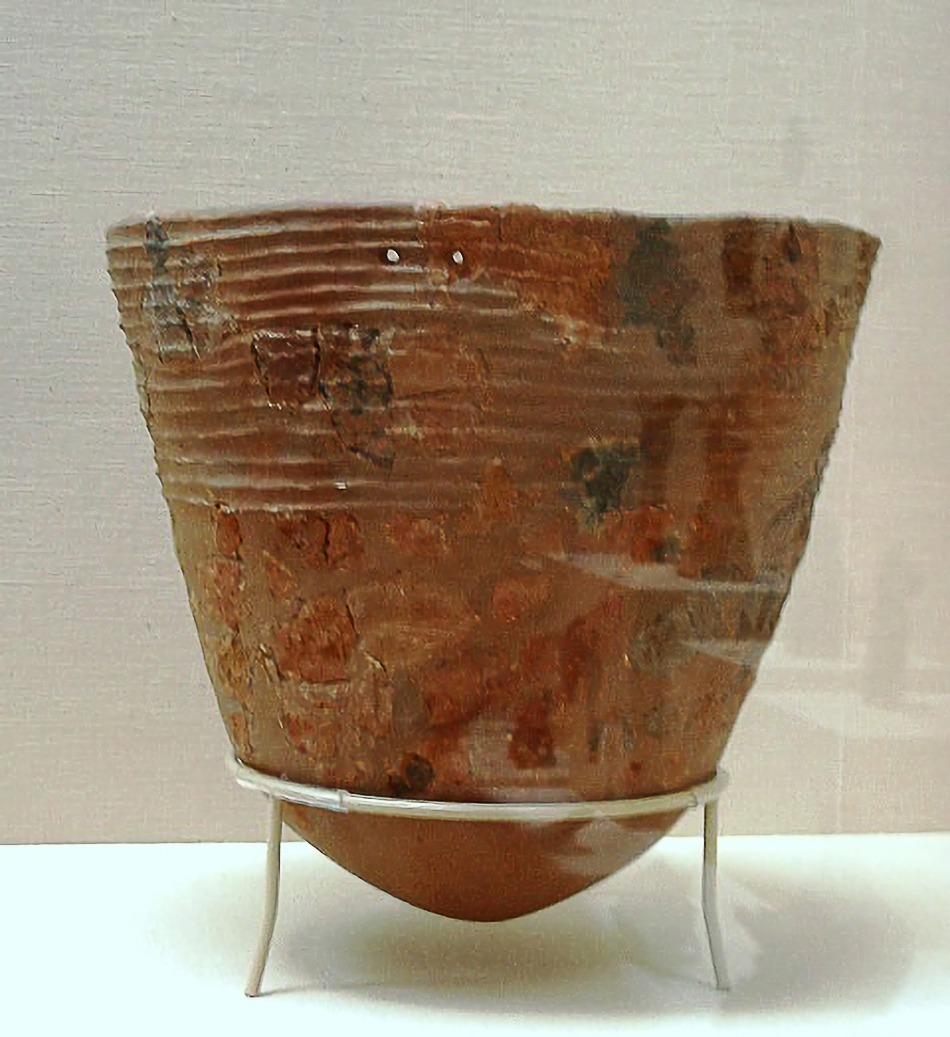
Fig.2 - Vase of the first Jōmon period (Japan, from 10,000 to 8000 BC), the oldest terrracotta in the world, Tokyo, National Museum, photo by PHG (source: http://it.wikipedia.org/wiki/File:JomonPottery.JPG)
Japanese Neolithic Jōmon culture is the oldest so far attested, though slightly earlier than those of Korea and of the Middle East.The sub Saharan, Chinese and Middle Eastern Neolithic cultures known to date developed shortly after, at the same time with one another.
Being separated by large distances, the logical conclusionis their independent evolution.
For the archeologists Oceania is rather problematic: in Australia Neolithic seems to be attested since at least 4000 B.C. This testify an independent neolithization, given to the physical isolation of Australia, even if the industry of polished stone seems attested only in the Pacific Islands, about from 2000BC, brought thereby people coming from South eastern Asia.
The term "Neolithic" is not officiallyapplied talking about the prehistory of the Americas (see par. 6.5). However, potteryand agriculture appeared in the region archaeologically known as Mesoamerica more or less after 6000BC, and polished stone around 3000 BC.
There are traces that after the massiv emigration from northern Asia to the Americas through the hypothesized Beringia during the last glaciation, there would be small successive waves of migration across the Pacific Ocean and especially from Polynesian and Southeast Asia. However, even the "Neolithic-not-Neolithic" Mesoamerican cultures seem the result of an independent and local cultural evolution.

Fig. 3 - Olmec colossal head (Messsico, c.1200 BC), Parque Museo La Venta, Villahermosa, Tabasco, Mexico (source: http://www.absolutcaribe.com/la-cultura-olmeca/ http://www.absolutcaribe.com/wp-content/uploads/2010/04/olmeca-_.jpg)
So it seems indisputable that the transition from the Paleolithic to the Neolithic culture took place at different times and by independent ways, in different places on the Earth.
In the areas where the Neolithic culture grew faster in terms of technological accomplishment, ie the Middle East and China, together with the area of the Indus Valley and Egypt, the Neolithic Age ended around 3000 BC, at the beginning of the Bronze Age.

Fig. 4 - Ax blade, polished green stone, from Hissarlik, Turkey, Bronze Age, c. 3000 BC, Naples, Federico II University, Museum of Anthropology (source: http://www.catalogomultimediale.unina.it/?p=185)
Soon after, Europe began to move to the Bronze Age about 500 years later.
Among the oldest Neolithic cultures an exception is the Japan’s, which passed directly from the Neolithic to the Iron Age, around 400 AD.
In the Americas, however, Neolithic ends only with the arrival of European technology, after 1500 AD. The same happened in Oceania, Siberia, Alaska and Greenland from about 1700 AD.
Nevertheless, Neolithic is not yet over among some people, such as the Papuans of New Guinea and the Yonomami and Jivaros in Amazonas.

Fig. 5 - Ceremonial axes, New Caledonia, early XX cent., nephrite, wood and rope, Luigi Pigorini Museum, Rome, photo by the Author

Fig. 6 - Ceremonial clubs, Maori (New Zealand), sec. XVI, nephrite,
Luigi Pigorini Museum, Rome, photo by the Author

Fig. 7 - Celt, Papua North-East, collected in 1983, Plymouth City Museum and Art Gallery (source: http://museumcatalogue.plymouth.gov.uk/Details/collect/73389)
However, among the various regions and populations, there is not only a temporal diversification, but also an even more pronounced differentiation in the evolution of the art of stone working: it seems that the evolution of cultures from Paleolithic to Neolithic has been driven from "locomotives" proceeding on separate tracks, and at very different rates depending on the areas and populations.
We'll see details and images in later chapters, in the following I’ll mention briefly some peculiar traits.
Almost certainly the most emblematic case is the Far East.
The oldest Neolithic culture in the world - recognized by all scholars - is the Japanese Jōmon and appeared around 10,500 BC. It was the first to produce terracotta objects but from the point of view of technological evolution stopped almost immediately.
As for working stone, it succeded only in creating very simple jewelry (see par. 6.2), around 3000 BC.
A true technological evolution in Japan was achieved only around 400 A.D. , due to Mongol’s invasion which introduced the iron-working.
On the contrary, the Chinese Neolithic cultures, that appeared about 2000 years later, immediately produced a great deal of technological innovations, particularly in polishing semi-hard and semi-precious stones and this is attested since at least 5400 BC (see par. 6.1). These innovations, however, remained "locked up" within the borders of China proper.
Such as Japan, also Extreme South East and Central Asia remained for a long time excluded from this technological explosion (in Southeast Asia Neolithic appears only from 4500 BC).
Moreover, it must be emphasized that the most recent discoveries reveal the almost simultaneous appearance of pottery in Japan and China, from about 20000 BC (see last chapter).
This gives rise to more difficulties to understand: why did these cultures, which appeared almost simultaneously in areas relatively close to each other and at the time perhaps even communicating (Japan was joined to the mainland during the last glaciation), evolved at so different speeds?
Further datum to decipher: Chinese Paleolithic industry seems to have produced only appreciable quantities of microliths. Why did it pass so quickly and so beautifully evolved to stone-polishing processing, particularly the difficult working of hard jade?
People of Neolithic Near East and Europe with polished stone produced almost exclusively utilitarian tools such as chisels, ax heads and clubs (see par. 6.4).
Although some of these objects clearly show that they were made for purposes not related to their practical and effective use, it is rare to find examples that do not have characteristics of tool.
The best known cases are those of the so-called "Venuses", which continued a production and a cultic/cultural tradition begun in the Paleolithic.

Fig. 8 - The "Venus of Savignano" (Savignano sul Rubicone, FC, Italy), attributed to the late Palaeolithic / early Neolithic (Luigi Pigorini Museum, Rome, photo by the Author)
In spite ofall this, some features are common toalmostallthe peoples of theNeolithic.
One of these featuresis that in creating objectsof particular value theyselectedstones withdistinctcharacteristics of hardness andresistance to impact, such as quartzite,serpentine, jasperandespeciallyjade.
To emphasize isthe selection ofstonespredominantlygreen orblue-green.
Jade is one of the denser natural stones and therefore has a high specific gravity (3 to 3.3), it is the natural stone more resistant to impact and has considerable hardness.
It is “soft” and"cool" to the touch and thevery compactand free ofinternal defectsemita pleasantsoundwhen they arestruck, a kind ofgentle tinkling.
In itsgreen andblue-greenhue it recalls thecolor of water, the vegetationin itsfull bloomandtheclear sky.In addition, whenpolished, it obtainsa beautifulluster,atranslucentglossthat marks itfrom allother stones.
Perhaps forthese reasons,itfascinated humanssince ancient times,from Neolithic times, just as I titled.
And thischarmstillendures, because probablytheNeolithichas been the cradleofmany of the beliefsand superstitionsstillalive and presentin our societies.
It is remarkable that even todaysome culturesare very linked to thetypical symbolism of theiconography expressedin the Neolithicthrough themanufacture ofjade(seechap.6), and that the sameis stillconsidered to befull ofprecious virtues(seechaps.2, 3and 4).
Let usknow it betterin the next3 chaptersandstudy a littlethe processing technique and in the usethat Neolithic men madeofit in Chapter 5 and 6.
2. Jade as a stone
2.1. What is jade
Two distinct minerals are commonly called by this name. This generates some confusion, especially in of trade and in historical studies.
Thereason why these two minerals are united under the current term of jadeis due to their similar appearance. However, their geological origin and chemical composition are very different.
For centuries, Western science considered them as a single mineral. Onlyin 1863, by the French mineralogist Augustin Damour, the two minerals were recognized as distinct.
Both belongto the group of the so-called "ultramafic rocks": geologists andmineralogistsclassify themamonginosilicates, the former asthemore compactvarietiesof the monoclinicamphibolecalledactinolite, a variety callednephrite, the latter as thealkalinepyroxenecalledjadeite.
 Fig. 9 - Rough Nephrite, Lower Silesia,Poland, photo by Piotr Sosnowski, source: http://it.wikipedia.org/wiki/File:Nephrite_jordanow_slaski.jpg

Fig. 10 - Rough jadeite, photo by Marisa Carrano, source: http://www.mineralicristalli.it http://www.mineralicristalli.it/Images/Schede_Giada_m.JPG
Bothnephrite and jadeite are not entirelystable: the contact with the humid air fullof mostly acid impurities, or with acidspresent in the soil causes asuperficial degradeof bothminerals, whichdecay intoalbite, aphyllosilicateso called for itswhitish appearance, that’s why many antiquities,especially those comingfrom archaeological excavations, have a white surface. The appearanceof the albitic patinais improperlycalledcalcificationand is avery slow process: they estimate that ittakes abouta millenniumbefore thepatina covers thesurface of the stonewitha homogeneous and reallydetectable layer.
![Eagle Transformation Figure [Mexico; Olmec] (1994.380) | Heilbrunn Timeline of Art History | The Metropolitan Museum of Art](http://media-cache-ec0.pinimg.com/236x/fb/eb/c4/fbebc47fe5a86c5fb6d310db82d7a2af.jpg)
Fig. 11 -Jadeite Olmecstatuettewithstronglyalbitic surface patina, 10th-6 th cent. BC,11.4x 4.2 cm "EagleTransformationFigure [Mexico; Olmec] (1994.380)". InHeilbrunnTimelineof ArtHistory. New York: The Metropolitan Museum of Art, 2000 (October 2006)
(Note - Ancient objectson theantiquities marketrarely showthe typicalalbiticsurface patinabecause they arenearly alwaysre-polishedin order tomake them more "palatable" to collectors.Paradoxically, sometimes there areitemson the market there are relatively recently,treatedin such way as to makethe surface to be albitic, in order to increase their presumedantiquity).
Both mineralshavevery high density,about 3nephriteand3.3 jadeite, andarethe mostshock-resistantnatural stones we know: thisquality isproperly calledresilience.
For thisqualityjade,nephriteandjadeite,has been usedby humanssince Neolithic times: jadeis a verysuitable stone for the manufactureof axes, hatchets, chisels, hammer headsandwork tools.
For the largeamount of time requiredfor their work, for theirdurabilityandfor their beauty, dueto the lusterthatthey couldacquire, articles in jade,nephriteandjadeite,became objectof worship andhoardingor wereconsideredof great value anyhow.
Apart from someChinese rings andsomependants, which show signs of weararound the holesof suspension andsome slightchippingon the edges, thus demonstrating that they have beenwornfor long, the objects in jade, included in particular celts, maceheads and chiselsany ageand anyculturetheybelong to, hardlybearsignsof use.
This led us think that theyweren’t objectswithutilitarian function, butceremonial onesor symbolsof power.
2.2. About nephrite (Chinese C'hen Yü, Zhen Yü or Ying Yu ', Japanese nagyoku, Maōri pounamu)
Nephrite is normally classified as an amphibole with 6/6.5 degrees of hardness on the Mohs scale.
In reality this mineral is constituted by tightly fastened chains of crystals of two different amphiboles, actinolite, a calcium, magnesium and iron silicate (from which the attribute of mafic) and tremolite, a calcium and magnesium silicate.
Nephrite has metamorphic origin, being generated by volcanic thermal activity, when water supersaturated by salts are subjected to medium-low conditions of pressure and temperature.
As I mentioned above, it has a double chain structure of crystals and when its surface is polished takes on a greasy appearance, as seen in this photo of a traditional subject of Chinese production.

Fig. 12 - "Sacred Mountain", China, Qing Dynasty (1644-1912), Shanghai Museum, photo by Gary Lee Todd (see par. 6.1) (Source: http://picasaweb.google.com/GaryLeeTodd /ShanghaiMuseumJadeGallery#5519192043624719954)
Widespreaded almost ubiquitously on the Earth's surface, it is present in massive deposits along the North American western cordillera and, like pebbles, in the rivers of almost all Europe, in part of Siberia and in the North Island of New Zealand.
Currently, the most exploited mining area is located in British Columbia (Canada), but historically the most important ones, those that got the materials to the Chinese artisans from the Neolithic up to about 1750, are located in East Turkestan, today China's province named Xinjiang Uyghur, particularly in the counties of Yarkand and Khotan that once formed an independent Buddhist kingdom.
Its "pure" color is a slightly translucent milky white, but the presence of iron, chromium or manganese oxides gives it a wide range of colors, from golden yellow to black, passing through beige, mauve, pink, ruby red and all shades of green, from the pale to the dark one. The most appreciated color has always been emerald green, also known as imperial green, though many large ancient Chinese artifacts are made from cream colored nephrite, with ocher stripes, called "mutton fat jade".

Fig. 13 - Pebble river of "mutton fat" colored nephrite, weight 16.8 kg (photo by Jadefiend Gallery and Workshop) (source: http://www.jadefiend.com/?page_id=728)
2.3. About jadeite (Fei cui or Fei Ts'ui in modern Chinese, ancient Yunnan Yü, Japanese kôgyoku, Nahuatl quetzalitzli)
Jadeite is a pyroxene with 6.5 / 7 degrees of hardness on the Mohs scale, perhaps even 7.5 for the variety called chloromelanite, a term now almost abandoned, formerly used for a such dark-green variety as to appear black, as the name implies (by ancient greek "chloros" = green "melanos" = black).
It is a silicate of sodium and aluminum, of metamorphic origin, generated from volcanic thermal activity, when water supersaturated by salts are subjected to conditions of very high pressure and temperature.
It has a crystalline structure and when its surface is very smooth, has a more bright and brilliant appearance than that of nephritis, without the typical greasy appearance of that one.
Jadeite is also much more translucent, in green "imperial" color can take on the quality of gem, so transparent that can be mistaken for emerald. This type of jadeite, essentially monocrystalline, is extremely rare, usually jadeite occurs in microcrystalline aggregates including other metamorphic crystals, especially albite and serpentine.

Fig. 14 - Unpolished jadeite block, photo by ♥ HEART MADE (source: http://www.heart-made.it/wp-content/uploads/2010/04/GIADEITE.jpg)
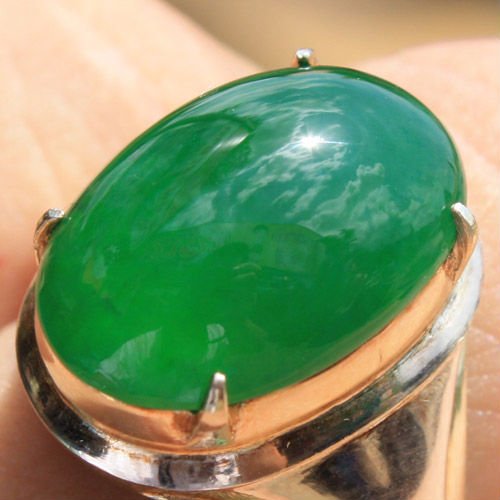
Fig. 15 - Jadeitegem seton a ring (source: http://img.alibaba.com/photo/119145854/Natural_Imperial_Glassy_Green_Burma_Jadeite_A_Jade_9_50ct.jpg)
It is very difficult to polish its surface perfectly, because of its crystalline structure, if examined with a magnifying glass even the most brilliant and well polished surface has gaps and small holes (vacuoles). Its "mirror polished” appearance is an optical effect, apart from the modern objects in jadeite which are very often subjected to a process of superficial absorption of colored paraffin, in order to give them a beautiful shine.

Fig. 16 - Jadeite: appearance under 10x magnification of polished surface not treated with paraffin
Because of the special geological conditions that allow its deposition, jadeite is concentrated in "islands": currently, the most important mining areas are located in the district of Moguong in Myanmar (former Burma) near the river Irawaddy’s sources, in Siberia along the Ussuri River and in Rio Motagua valley, Guatemala.
There are a few veins in Italy close to Monviso and in the Ligurian Alps, in Russia in the Polar Ural region, in California's Sacramento Valley and in Honshu island in Japan.

Fig. 17 - Big block of blue-green stone, almost certainly jadeite, encased in a dry stone wall in the town of Verres, Val d'Aosta, Italy, photo by Donato Arcaro (source: http://www.naturaosta.it/geoturismo/Verres.htm)
The entire production of Burma jadeite - comes the most valuable - obtained from Moguong, the Myanmar’s region, is absorbed by the Chinese market.
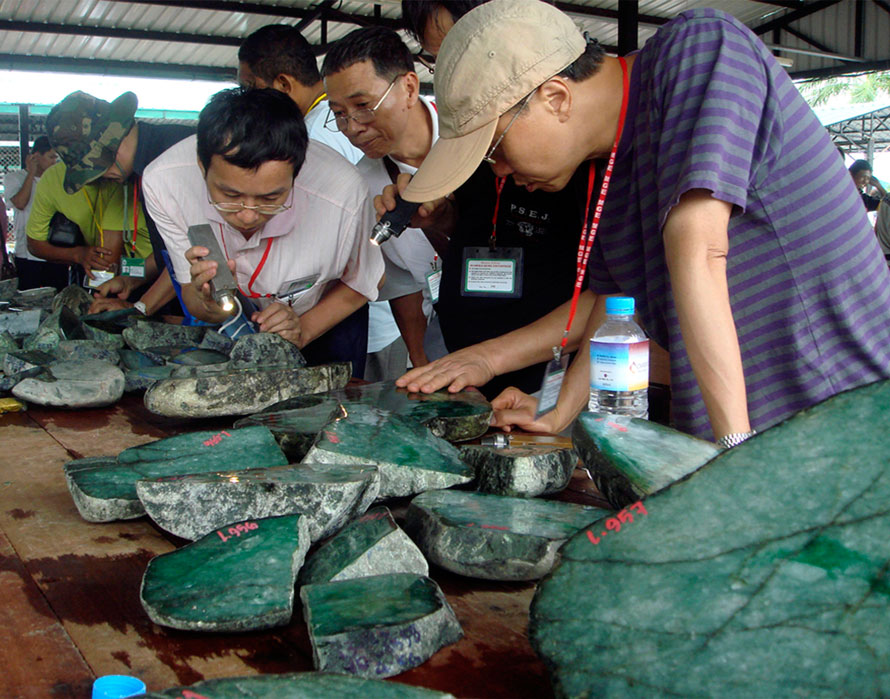
Fig. 18 - - Image of the Chinese market of rough Burma jadeite (source: http://www.yoneyama-eclub.org/img/image011TN6%20green%20ishi.jpg)
It occurs almost in the same colours as nephrite, but it is very rare and appreciated also in lavender, lilac, blue and golden yellow ones. Because of the rarity of these hues and their appreciation by the market, very often the common white jadeite is colored, making it absorb by hot artificial colors diluted in liquid paraffin.
It's important to note that only the rarest and almost transparent green stone classified as “jadeite gem” is almost totally pure (more than 98 %, the remainder is reduced Cr that gives the stone its emerald green color ).
Normally jadeite contained in the ore is less than 95 % because jadeite crystals are aggregated with other silicates such as serpentine, albite, augite, acmite and others.
Commercially, when in the mineral jadeite is present for more than 75% , the stone is precisely classified as " jadeite ", if less than 75% and more than 50% , as jadeitite, if less than 50% respectively as jadeitic- serpentinite, -albite, -augite, -acmite depending on the prevalent mineral.
3. The origin of the word jade
It occurs almost in the same colours as nephrite, but it is very rare and appreciated also in lavender, lilac, blue and golden yellow ones. Because of the rarity of these hues and their appreciation by the market, very often the common white jadeite is colored, making it absorb by hot artificial colors diluted in liquid paraffin.
It's important to note that only the rarest and almost transparent green stone classified as “jadeite gem” is almost totally pure (more than 98 %, the remainder is reduced Cr that gives the stone its emerald green color ).
Normally jadeite contained in the ore is less than 95 % because jadeite crystals are aggregated with other silicates such as serpentine, albite, augite, acmite and others.
Commercially, when in the mineral jadeite is present for more than 75% , the stone is precisely classified as " jadeite ", if less than 75% and more than 50% , as jadeitite, if less than 50% respectively as jadeitic- serpentinite, -albite, -augite, -acmite depending on the prevalent mineral.

Fig. 19 - 3ringsfrom the tomb ofTutankhamun:topleft, ololithic signet ring ofAnkhesenamunandAy, the specific gravity test suggests thatit isnephrite(Lucas and Harris, 1962) (source: http://pinterest.com/pin/268456827760717709)
In modern times, thefirst contact Europeans hadwithjadeiteartifacts,occurredinthe early16th century,in Mexico, whenCortésreceived fromMohtecuzomaXocoyotzin, the leader of the Aztecs, usually known as Montezuma,somegreenstone articlesto be deliveredto CharlesV.
The Spaniardsdid not recognize thetype of stone, andCortés,in the cover letteraddressed tohis emperor, called it "esmeralda".
(Note. Actually, Aztecs produced very fewitemsinjadeite. Almost allof the objectsof this materialin their possessionhad probably beenobtainedthroughtrade withthe neighbouring nations, and was the result ofpredationinancient tombsbelonging topopulationsoftheOlmecorMaya culture.
The objectsin hard stoneproductsby Aztecs, including those injadeite, besides being few, to our eyeshave generallya moreprimitive look than those produced byearlier populations. The finest oneknownand almost certainlyAztecisthisstatue of Xolotl,god of the underworld).
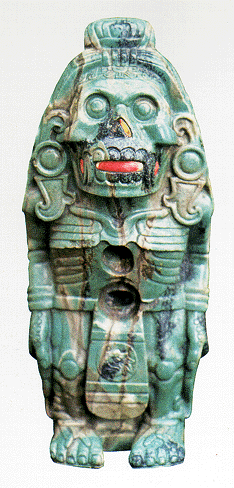
Fig. 20 - Statuetteof the godXolotl, WürttembergischesLandesmuseum, Stuttgart (source: http://www.latinamericanstudies.org/aztecs/skeletonized-deity.gif)
Cortés wrote that Mohtecuzoma handed him 5 items made with a stone the Aztecs called 'chalchihuitl' and told him they were precious objects since each of them was worth more than a whole load of gold. The event that Cortés refers to this stone calling it 'esmeralda' did they conclude that it was jadeite. But the word 'chalchihuit' , literally meaning 'the land of the earth' , perhaps indicated turquoise, more than jade, that seemed to be called 'quetzalitzli' or 'stone of the quetzal', a bird whose male has very long and emerald colored tail feathers.
Artifacts in nephrite of Chinese production arrived to the hands of Portuguese merchants a little later, in Canton at the end of the 16th century.
From these facts arise the two most common schools of interpretation about the birth of the word jade.
It seems that the Spanish/Portuguese have learned from the Aztecs/Chinese that jade had beneficial effects in the treatment of kidney disease.
For this reason, most of the authors argues that the Spaniards named the mineral "piedra de la ijada", ie “the hip stone”, because it should have treated all kidney diseases if applied on the skin at the side of the body. From ijada the modern Spanish word jade .
Others argue that the Portuguese named the mineral "pedra de la mijada", ie “pissing stone” , as they would hav learnt from the Chinese who used it the same way, to aid the expulsion of kidney stones through urination.
So from the word mijada came jada and then the modern Portuguese jade (pay attention, the word in Spanish and Portuguese is written with the same Latin characters, but is pronounced in a slightly different way. In Spanish, "j" represents a front vowel like " h" in English "home" , in Portuguese is the same sound that has in the French spelling) .
Incidentally, it should be noted that the name “nephrite”, used to designate the stone anciently worked in China, is derived from the ancient greek "nephros" = kidney, but is a term, as I said , only coined in 1863. This makes smile a little, if we accept the hypothesis of Spanish derivation, that is Aztec use: the modern name of nephrite is attributed to the ancient Chinese jade par excellence, and derives from the use which is supposed they made of jadeite in Mesoamerica.
A further interesting hypothesis, almost unknown in the Western world, is the one suggested by Manuel Keene in Encyclopaedia Iranica, Vol XIV, about the derivation of the word jade from Turkish-Mongol languages spoken around the 10th – 14th cent. in the vast area surrounding Samarkand.
In this regard, see the long note at the end of chap. 7.
There are other theories about the origin of this word, but they seem to be less plausible.
For example, the origin supported by some French authors: from the Chinese word yü, I do not know why pronounced ya, then yad, at last jad... !!???
Aboutthis hypothesis, Fred Ward (page 6) goes a bitagainst the stream.
He conveys thatthe term "piedra deijada" was given to theFrench language as"pierrede l'ejade" and from there, by apheresis,thecurrent term"jade".
In addition, he states thatin the Renaissance,with the introductionof the taxonomyin Latin,theMesoamericanjadewas called "lapis nephriticus" becauseonlythis stonewas the associatedto the cure ofkidney disease.
For abouttwocenturies, then, the term wasjoined to thestonewe now calljadeite.
When, in 1863, Damourrecognized the existenceof twojades, he applied theterm "nephrite" to the "ancient" Chinese jadeand coinedthe new term "jadeite" forBurmaandMesoamericanjade.
Thus, according toWard,the origin of this"joke"would be foundin the nomenclatureintroduced byDamour.
4. Jade therapy and esotericism
"In ancient times superior men found in jade the likeness of all excellent qualities. Soft, smooth, shiny, such as benevolence, fine, compact and strong, such as intelligence, hard-edged, but not acute and sharp, like justice, bright and airy, such as purity, its flaws do not hide its beauty, nor its beauty hides its flaws, such as loyalty , its iridescent brightness represents heaven and the long and clear notes, that emits when hit, are celestial music..." .
So the Chinese philosopher Confucius ( Kǒng Fūzǐ / K'ung-fu-tzu 551-479 BC ) reported about the reverence the Chinese had for these magnificent stones, to which from time immemorial many positive virtues were attributed. Among the precious stones perhaps only the jade has such an abundance of legend and magical tradition , such a sense of fineness, such an intense aura of mystery and magic ...
In the previous chapter we have seen that it is believed that the Europeans have had news that in ancient China or in pre-Columbian Mexico jade was used for the treatment of kidney disease.
We have no concrete evidence of this use of nephrite in China ( Portuguese origin of the word jade ) nor of a similar use of jadeite by the natives of Mesoamerica, such as the Maya, Aztecs and Olmecs ( Spanish origin of the word) .
These assumptions are not supported by archaeological or historical evidences, and some scholars think that these theories about the use of ancient jade stones is based only on modern legends.
However, it is a fact that in Chinese culture (and according to some authors, especially in the Taoist culture) jade represents courage, justice, modesty and altruism, ie the most positive qualities of human beings. In a list attributed to Confucius jade shows all the characteristics of the five moral virtues: kindness or charity (its shine and its splendor, warm and bright at the same time), wisdom (the harmonious purity of its sound), rectitude-uprightness or openness (its translucency), courage (the hard jade breaks but does never bend), and equity (it has unevn and sharp corners, but don’t cut ) along with kindness, intelligence, purity, education, loyalty .
The Chinese also believe that jade is an absorbent stone, meaning that it takes up a bit of the personality and spirit of the wearer.
For this reason they used to give an object of jade, long carried on his/her own person, to him/her who had to leave his/her family or his/her beloved, so that he/she could bring with him/her part of the spirit of the family or of the beloved.
For the Chinese, it is also a symbol of long life and bringer of peace and wisdom. And it is interesting to note that the word actinolite, the "scientific" name of nephrite, is derived from the ancient greek "actinos = radius" and "lithos = stone", because this stone, observed under the microscope, has a typical radial structure.
According to Joseph Needham (vol.II, p. 558), the Chinese used the word "li" to refer to this structure visible in nephrite stone, because the character "li" originally meant the radial fiber structure of the muscles and plants tissues and textile.
Fritjof Capra (pag.334) quoting the above step, says that the Daoists used the word "li" to refer to perfection: this would lead to think that the great Daoist sages regarded the jade as perfect stone, being the stone "li" (radial structure and perfection together). Moreover, it seems that according to Daoist, ingestion of jade powder allowed to have access to the immortality of the Wises.
The Chinese also believed that jade made flesh incorruptible, especially if used in combination with gold.
Archaeologists found some royal tombs containing bodies wrapped in anarmor of jade tesserae, tied together with threads of pure gold.
This is the coat in jade (nephrite) that preserved the body of Emperor Jingdi’s son (Han period, 206 BC-220 AD), Prince Sheng Liu, who died in 113BC. It consists of 2498 (sometexts say 2690), triangular, rectangular and polygonal tesserae of jade sewn with 1100 gr. gold thread.

Fig. 21 -The dressof PrinceSheng Liu, length mt.1.88 (source: http://facweb.furman.edu/~jleave/courses/arteastasia/slide%20root/SLIDE_PROJECT/C/C023.lo.jpeg)
It should be notedthat, althoughfully encapsulatedin the armorof jade,the prince’s body was stillcorruptand totallydissolved, like that of his wife, TouWan, who died about 10years later and wasburiedin the same way, and like thosethe other6princesorChineseemperorburiedin the same manner and discoveredin various localities inChina.
(Note:In literature, especially in old texts, it often happens to meet atranscription ofChinese wordsaccording to theWade-Giles method, or other methoddifferent from the onealmost universally and morerecently adopted, thepinyin).
pinyin tonal class ideograms Wade – Giles meaning
Kǒng Fūzǐ 孔夫子 K'ung-fu-tzu Confucius
Lǎozǐ 老子 Lao tze/ Lao Tzu
Dao 道 Tao walk on
the royal road
Dàojiào (Daoismo) 道教 Taoismo the way of the Dao
Ying Yu' Ying Yü generic jade
Zhen Yü 硬玉 C'hen Yü nephrite
Xin Jiang xin1jiang1 新疆 Sinkiang
Kun Lun kun1lun2 昆仑(山) Kuen Lun
fei-cui fei3-cui4 翡翠 fei-ts'ui jadeite
li li3 里 li
The meaning ofli(li3) is "something perfect innature," asthe textureof the muscles and of thefibersof the wood.
"Fei" is the Chinese nameof the kingfisher, little birdwith beautifulemerald-greenorblue-greenplumage, "cui" ("ts'ui") means green.
In Chinese,kingfishertakes towardJadethe same meaning asthe quetzalin the ancientMesoamericanlanguages, ie the greentied to nature. Sofei-cui expresses the concept of"so green that greener is impossible”.
 Fig. 22 - Kingfisher (Alcedo atthis) (source: http://it.wikipedia.org/wiki/File:Martin_Pescatore.jpg)
 Fig. 23 - Quetzal (pharomachrus mocinno mocinno) (photo by D. Hatcher)(source: http://en.wikipedia.org/wiki/File:Quetzal01.jpg)
Incrystal therapy green jadeis associated with the 4th chakra, the heart center, with water and signs of Cancer, Pisces, Libra and Virgo:
- being associated with the heart chakra, it is useful to treatstress, anxiety and disordersof blood circulationandas an aid tomemory
- being associated with the heart chakra and the sign of Virgo, it is the stone of love par excellence
- being associated with water, has effecton the sphere of the emotions and on the feminine sphere (once more, love, then intuition and compassion), on kidneys, stimulating and regulating their function the expulsion of the calculations, as well as it streng thens the immune system.
On the other hand, darkocher jade is associated with the2nd chakra, the one of the lower abdomen. It strengthens the spleen andliver,stimulating theliverpurification.

Fig. 24 - The chakras(author's design): 7 -brain, pineal gland,skull 6 - Nose, ears, eyes, pituitary gland 5-throat, bronchial tube, thyroid 4 - heart,lungs,thymus, circulation,hands, skin 3 -digestion, pancreas, nervoussystem 2 – genitourinary apparatus, liver, spleen, kidney, prostate 1 -spine, bones, rectum, blood, adrenal glands
Still according to crystal therapy, jade has also calming and soothing properties, eliminates fear, comforts and calls for benevolence. Then, it helps the heart to find compassion to take the right decisions, balances emotions and gives modestand clear ideas. Finally, it opens your mind and persuades to renewal.
5. Processing Techniques
It is obvious that we are not sure how the stone was carved in prehistoric times.
However, we can deduce something studying the technique of those people who are still living, at least partially, in the Neolithic and of those who, when they were " discovered " in the recent past, were Neolithic from the point of view of technology and of which we have evidence, thanks to the diaries and reports of those who approached them in historical times .
I mean , as I mentioned, some people of Amazonas, the Papuans, the Maori and the Aztecs, which scholars don’t label as Neolithic .
In addition, by studying the traces of processing, identifiable on artifacts from Neolithic in the strict sense, and what is present in "workshops" found during archaeological excavations, they can establish with a good approximation what techniques and tools Neolithic men used to work and above all to cut, grind and drill the stone.
First, it is necessary to specify that the technique of processing the stone in Neolithic does not come suddenly, it is the product of a long evolution that started about 2 million years ago.
The first step, of course, was to identify the material, which was to be a compact stone, of "right" type, mostly flint, granite, serpentine, quartzite, jadeite or nephrite, depending on the finished product that they wanted to achieve.
We know quite well where the raw material was obtained, because they found many ancient quarries of these stones, moreover in the river-beds there were- and are still today - conspicuous sized pebbles.
Regarding the quarries of nephrite and jadeite, since digging the blocks out of the veins of these minerals was very difficult, it is thought that they used fires in the vicinity of the veins, in order to warm and expand the mineral, cooling it suddenly pouring cold water to cause the spontaneous breaking due to the sudden contraction by cooling.
However, it was not necessary to have local sources of supply, since it is established that as early as the late Paleolithic the best material was marketed on very long routes.
For example, in China nephrite initially was obtained from river pebbles, which at one time were lacking, so since the late Neolithic was inevitable to import the raw nephrite obtained from quarries located in Turkestan, Kun Lun mountains, more than 3000 km away from the manufactoring places.
In Britain have been discovered Neolithic tools made from flint and jadeite coming from the Italian and Swiss Alps.
In Costa Rica, jadeite locally manufactured came almost entirely from Rio Motagua valley in Guatemala, which is about 1000 km as the crow flies.
The river pebbles are generallly quite smooth and very often they already have the approximate shape of the head of an ax or a chisel, so it is likely that this returned doubly useful.
The quarry material, however, was more difficult to be work because it required considerable time and skill to be hewn and reduced to the initial coarse form.
The traces observed tell us that they proceeded by percussion (carefully, not to break the block and make it useless) chipping away small pieces till to reduce the raw block to the desired initial shape .
This technique was known, however, since the Palaeolithic period, as the technique for drilling holes through percussion.
Anyway it is possible that the raw blocks were cut by the use of saws made of sturdy wood or animal horns on which were fixed sharp splinters of flint or obsidian, where available.
Reduced the material to the desired raw form, they continued with a careful hammering, to remove roughness from the surface, and then they passed to the smoothing.
It is likely that initiallythey have proceeded in a rudimentary way, rubbing the object on a sandstone constantly wet with water, orwithsand mixed with water or fat, so consuming patiently the surface of the stones.
Probably, a subsequent improvment was to select sands the richest in quartz and of finer and finer grain, so as to refine the luster. Maybe they ground pieces of quartz and other enough hard stones, to obtain selected powders to use for the aim.
In the Neolithic processing stations on Italian Alpsthey found some out-and-out sandstone tables rich in small crystals of garnet (hardness 7.5), just used to consume and smooth other stones, in particular the local jadeite.
It is impossible to imagine when they switched to sawing pieces from the blocks using bow-and-string saws and to drilling the material with bow or pump drills. What is certain is that the traces of processing already present on some of the oldest Chinese nephrite objects tell us that the cut had to be done by using a tool much more technologically advanced than “sharp fragment” saw.


Fig. 25 - The operation of sawing had to be carried out in one of these ways (the two drawings, such as the following ones relating to drills and holes, are of my hand, and it’s obvious ...)
As for the operation described above, there is only to observe that in the first case two people were required, in the second one was enough although in this way cuts were less precise.
The study of processing traces tells us that the sawing rope was made to rub over a slurry of abrasive powder, constantly moistened to prevent overheating.
All texts, without distinction, insist on the assumption that the powder was made to adhere to the rope by fats: it seems improbable, because fat would have kept the powder, but at the same time it would have worked as a lubricant, the exact opposite of what they wanted to get.
I think it's much more plausible that they probably used some plant resin.
The biggest problem that occurs is related to the material with which the rope could be realized.
All the texts insist on the theory that ropes were made of woven plant fibers or thin strips of leather.
Ropes so made haven’t sustain the (very few) experiments: ropes made of plant fiber or animal tanned skin can stand wear and tear only for a short time, breaking after few movements of to and fro.
A craftsman, a friend of mine, suggested me the hypothesis that the ropes were made with animal or human hair, because the fibers of which it is composed align and relax with the movement, making it easier and preventing the rapid wear of the rope.
That’s why – I remember - the bow of stringed instruments is made with horsehair of horse tails (that of mare is fatter and weakened by urine). To increase the friction, the rope is constantly treated with rosin, the residue of the distillation of turpentine, an oleoresin secreted by some conifers.
I do not know if in terms of frictional resistance produced by to and fro movement there is difference between a rope made of horsehair and one of human hair. But it is important and necessary to consider that nephrite was carved by Maori and jadeite by Olmecs, Maya, Aztecs and Nicoyans. In the areas inhabited by these populations horse was unknown and - however I know – didn’t even exist another animal that could have so long hair to be used for this purpose, whereas long human hair were certainly available.
I would like to make some experiments about this ...

Fig. 26 - Two images of a river pebble of jadeite, partially processed, coming from the site of Las Huacas, Nicoya Peninsula, Costa Rica, kept at the Carnegie Museum of Natural History, Pittsburgh (USA). The "almond" on the flat face are evident, a residue of the cut of a section made using a rope saw, and the start cutting notch on one of the lateral faces. The work is dated between the 3rd cent. BC and the 5th cent. AD, the ore comes probabily from Rio Motagua valley in Guatemala (size cm. 6.1 x 11.8). From Jade in Ancient Costa Rica, The Metropolitan Museum of Art, NY, 1998
As you can see in the two images of the pebble, cut made with sawing ropes leaves a distinct mark.
In addition to the striae due to rubbing of the powders, which are visible with the naked eye in the original, it is very evident the characteristic "almond" due to the cut made in two times, starting from both lateral faces.
When the diaphragm at the center was sufficiently thin, they put wedges in the cut to separate the two sides at a single blow.
The remaining of the central diaphragm was almond-shaped because the sawing rope flexed and therefore did not produce a straight cut, but a slightly curved one.


Fig. 27 - Bow drill (right) and pump drill (left). At the top of the picture on the right you can see the stone on which the pressure was exerted. In both, at the bottom, just above the tip, you can see the circular stone that was necessary as a flywheel to maintain as constant as possible the rotation speed (drawings by the author)
The holes were drilled using one of these two tools, respectively called bow drill and pump drill.
The lower end of the rotating poles was empty.
In the cavity could be inserted a bit, to produce a cup mark or a conical hole, or the cavity could be left without bit, in which case it could produce an "eye" or a little cylinder plus a cylindrical hole.
If used by a single person, I think pump drill was less accurate than bow drill, it was much more difficult to maintain perfectly straight the pole.

Fig. 28 - The cylindrical hole was made using a bit-free hollow pole. This pole was made using a animal bone, nearly always of a bird, or a piece of bamboo, of a species whose wood is very rich in silicon and is therefore very abrasive. Performing a hole using such a pole, a skilled craftsman also made a cylinder of stone. This system was also used to engrave circles on the surface of the material
The conical hole was made by fitting into the cavity at the lower end of the pole a tip of a very hard material, usually quartz, which maintained its arrow shape, unlike the cup mark, practiced with a bit of relatively soft material and the help of abrasive dust, which consumed the tip until it assumes a round shape.
The ox-nose hole was got by making two oblique holes, that converged inside the material, creating a real through loop.

Fig. 29 - Back of a little head, likely central element of a necklace, with an ox-nose loop hole, Costa Rica, Gran Nicoya culture, jadeite, c. 3rd cent. BC, h. 4.1 cm, private coll. (photo by the author)
In the case of bi-conical and double cup mark holes, drilled from both opposing surfaces, the craftsmen were very skilled in making the two holes meet with precision.
Some artifacts in jadeite, rod shaped and 50 cm long, found in Costa Rica and dating from 3rd cent. BC and 5th cent. A.D. have two conical holes meeting almost perfectly (the resulting shifting is less than one millimeter!).
Giancarlo Sette - August 24, 2013
Archaeoacoustics in ancient sites
A new way to analyzing archaeological locations
Paolo Debertolis*, Niccolò Bisconti**
*Department of Medical Sciences - University of Trieste
**Department of Archaeology and Art History - University of Siena
Scientific paper presented at "Congress “The 1st International Virtual Conference on Advanced Scientific Results (SCIECONF-2013)",Slovakia, Zilina, June 10 - 14, 2013
Original paper for download here
Abstract — Using archaeoacoustics we can analyze ancient sites from another point of view to discover the real purpose of their builders to point out natural phenomena connected with a particular location and the mystic state of visitors. We also present the results from two ancient sites we studied over the last two years in Europe.
Keywords: archaeoacustics, ultrasounds, abbye, San Salvatore, Visoćica, Bosnia, pyramid, infrasounds, low frequencie sounds
I. Archaeoacoustics
Archaeoacoustics is not a new science, it is a new perspective to analyze archaeological sites which sometimes have interesting sound characteristics [2,6]. It can demonstrate sound occurrences projected by the builders of some structures, and also natural phenomena which can influence the psychological state of a person in a mystic state or during prayers [2,3,4]. In a previous article we described the resonance phenomenon we found in some archaeological sites [1]. Using modern digital recording techniques it is now possible to record very clearly non audible sound frequency bands such as ultrasound or infrasound. These bands have a direct effect on the human body without a person being aware of the associated mechanical vibrations. The hypothesis of our research group is that in some archaeological sites considered sacred for thousands of years, there are measurable natural audio phenomena that make the place somewhat more mystical than others.
Following this line of research, we started to test various sacred sites in Europe to assess this hypothesis. We found interesting archaeoacoustics effects at some sites, which included the Cistercian Abbey of San Salvatore in Abbadia San Salvatore in the province of Siena (Italy) and among ruins of medieval monastery/fortress on the top of the Visoćica Hill near Visoko in Bosnia-Herzegovina.
II. Ultrasounds, infrasounds and audible low frequencies
There are a lot of scientific papers that evidence mechanical vibrations have a positive or negative influence on our health and there are several predominant sources of naturally occurring ultrasounds, very low frequency and infrasound found in the environment. Depending on age and gender, humans can perceive sounds in the range of 20hz to 20Khz, in some cases sounds above 14-18Khz are not audible to the human ear. Careful measurements have shown that hearing does not abruptly stop at 20Hz but the ear is capable of registering infrasound if the sound pressure is sufficient. Frequencies above 20Khz are considered ultrasound whilst frequencies below 20Hz are considered infrasound.
Low frequency sound has a relatively long wavelength and low material absorption rate, hence it has the ability to travel vast distances. These properties make it possible to achieve a profound effect on vast tracts of acoustic space with the production of high sound pressure level acoustic waves. Low frequency sound is non directional sound in it’s propagation and therefore has the effect of enveloping the individual without any discernable localized source [8].
Some animals such as elephants, hippopotamuses, rhinoceros and giraffes are known to use infrasound to communicate over distances. Many animals are able to perceive infrasonic waves that pass through the earth before natural disasters, which act as an early warning system for them.
Any severe and artificial extreme imposed on the sonic environment has a profoundly destabilizing effect on the individual, indeed infrasound has been used in the context of wars and nowadays there are currently several organizations conducting research in the area of acoustic weapons. However, natural low vibrations with an absence of high pressure can have a positive influence on human health and some people can perceive very low-frequency sounds as a sensation rather than a sound. Infrasound may also cause feelings of awe or fear in humans. Given it is not consciously perceived, it may make people feel that odd or supernatural events are taking place [9]. So it is possible to hypothesis that where there are a lot of natural low vibrations present, ancient populations considered these sites to be “sacred”.
The same argument could be applied to natural ultrasounds. The upper frequency limit in humans of approximately 20.000Hz is due to limitations of the middle ear, which acts as a low-pass filter. However, if ultrasound is fed directly into the human skull and reaches the cochlea through bone conduction, without passing through the middle ear, it is then possible to hear also these frequencies [11]. Because in humans the upper limit pitch of hearing tends to decrease with age, children are able to hear some high frequencies sounds that older adults cannot [10]. Ultrasounds are well known and used in the medical field. Ultrasonography is a diagnostic medical imaging technique used to visualize many internal organs with real time tomographic images. Ultrasound is used for healing inflamed tissue and for therapeutic applications or in dentistry for cleaning tartar from teeth. Although the long term effects of exposure to ultrasound at strong intensity are still unknown, currently medicine considers the benefits to patients outweigh the risks. In contrast to medical applications ultrasound has been studied as a basis for sonic weapons, due to its direct effect on the human body and nervous system. Applications have been developed that include riot control through the disorientation of attackers and lethal levels of ultrasound that can be used like a gun. In fact high frequencies can readily be absorbed by materials and being highly directional they have incorporated in the design of acoustic weapons.It is probable that natural emissions of ultrasounds were heard by very young people of ancient civilizations as a supernatural sound, but in the rest of the population these were felt only as a good or bad sensation relative to the perceptible frequencies in a particular location along with the mystic aspect of the site.
From this assumption from 2010, we decided to begin researching these frequencies in “sacred” ancient and well known archeological sites. This study gave amazing results for a possible explanation as to why a particular site was considered sacred. We analyzed several ancient sites and we are focusing on other locations in Europe. In this paper we will speak about two such sites we analyzed: the Abbey of San Salvatore in Abbadia San Salvatore (Siena) in Italy for ultrasounds and Visocica Hill in Visoko Valley in Bosnia-Herzegovina for low frequencies and infrasounds.

Fig. 1 - The Abbey of San Salvatore in Abbadia San Salvatore (Siena)
III. Materials and methods
We used two types of dynamic high-end microphones extended in the ultrasound field together principally with a digital portable recorder with a maximum sampling rate of 192KHz (Tascam DR-680 of TEAC Group), but we controlled the result with other digital recorders (Tascam DR-100 and Marantz PMD661) with less technical characteristics.
For recording in water we used ultrasensitive omnidirectional microphones also used by sea biologists (Aquarian H2a-XLR Hydrophone, frequency response from 10Hz to 100Hz) with shielded water proof cable from factory, which we used especially for the tank of Abbey of San Salvatore. This type of microphone has a wide bandwidth typically used to hear the song of the whales up to several kilometers away. In this case the sound is transmitted very quickly in water, with the body of water acting as a reflector capable of capturing every vibration many meters away.
At the same time as recording in the air we used professional studio microphones with a wide dynamic range and a flat response at different frequencies (Sennheiser MKH 8020, response Frequency 10Hz - 60.000Hz) along with shielded cables (Mogami Gold Edition XLR) and gold-plated connectors.
Before recording we used a spectrum analyzer (Spectran NF-3010 from the German factory Aaronia AG) for searching electromagnetic phenomena present around us which could have had a negative influence on our results.
For analyzing audio records we used PRO TOOLS ver. 9.05 and Praat version 5.3.02 software for Mac to overlap and mix the various tracks recorded using two different methods of recording and Audacity ver.2.0.2 and Praat ver.5.3.35 for Windows.

Fig. 2 – The set used for recording in the Abbey of San Salvatore: the recorder Tascam DR-680 and Sennheiser MKH 8020 microphones
IV. the Abbey of San Salvatore
The first evidence of the existence of this monastic centre in this location dates back to a document from 762 AD, but the existence of this place can be traced back to the sixth century BC during the process of urbanization of Northern Etruria by the Etruscans.
The excavations carried out in the area of the abbey in the '90s however, also gave rise to the discovery of arrowheads and flint, indicating the presence of a population since the Upper Paleolithic period.
The abbey has a large sixteenth-century cloister with a huge tank of water, the depth of which is considerable and that according to oral tradition, sits on a natural source of water. It also collects rain from the surface above and filters it with an ingenious system of cleansing by carbon tanks located on the sides.

Fig. 3 - The well at the centre of the cloister of the abbey of San Salvatore offers the only access to the huge tank below
The depth is greater than ten meters from the edge of the pit at the centre of the cloister. Such a tank of water is precious in archaeoacoustics because it works like a huge dish that collects the sound from underground, thereby behaving like a perfect transducer. Thanks to the availability of the monks still present in the abbey we proceeded to reopen the well at the center of the cloister which had been closed for over 15 years and introduced microphones in deep water.

Fig. 4 - two microphones Hydrophones being placed in the well, despite a cable length of 12 meters, they did not resting on the bottom of the tank

Fig. 5 - Immediately we observed a strong ultrasonic signal coming from underground
We also placed one other digital recorder in the cloister to verify the presence of spurious sounds from the environment that could affect the main recordings. But in all records we didn’t find any anomalous noises from other sources.
We performed an immediate graphic control on the recordings so that optimal adjustments of the recording volume and execution times could be undertaken. We took ten recordings over a period of three hours with a long pause in between, but the same result was found in all recordings. We took these measurements at two different times of the year for three consecutive days.
The results appear extremely interesting: in all recordings made over two hours we found a very intense mechanical ultrasonic vibration present, oscillating between 26kHz and 30kHz with a mean peak around 28.000Hz. with the look of a Gaussian curve.

Fig. 6 – There is a peak of ultrasounds around 28.219Hz with an almost total silence on the other frequencies
Transposing the ultrasonic signal into the audible band was similar to a modulated whistle.
To check whether the signal was present in a larger area of the abbey we placed the microphones in a mining pond located less than 500 meters away, we also examined other bodies of water nearby and in neighbouring locations, but we did not find any ultrasonic frequencies present as those found in the Abbey of San Salvatore.
V. Visoćica hill
The hill of Visoćica is in Bosnia and Herzegovina and on the top can be found the site of the Old town of Visoki. Visoki was a famous medieval royal castle town and monastery destroyed by the Ottomans during the fourteenth century. The first mention of the town was in 1355 by King Tvrtko I of Bosnia, but from ancient artifacts found in that location we can suppose that a settlement was present from very ancient times.
During 2010 together with archaeological researches by Bosnian Pyramid of the Sun Foundation in Visoko Valley, Dr. Slobodan Mizdrak discovered an interesting natural emission of radio waves on the top of the hill among the ruins of the Old Town. These emissions were confirmed with an experiment in April 2011 (7), so our research group began to study the archaeoacoustics aspects of this site from 2011.
Also in this place we found ultrasounds of a frequency around 28,4KHz, but not constant (12). So we decided to analyzed the site using the same methods as those used on the Abbey of San Salvatore.

Fig. 7 - Visoćica Hill also called Bosnian Pyramid of the Sun for its pyramid shaped aspect is over the new town of Visoko (Bosnia-Herzegovina)
We found a very strong emission of low frequencies and infrasounds around the top of the hill. The range in total silence and with an absence of wind was between 10 Hz and 70 Hz with a large peak around 48 Hz. The volume was not elevated. This mechanic vibration is the most likely reason why so many sensitive people have the sensation of energy when they arrive on top of Visoćica Hill visiting the ruins of an ancient castle. Below a particular volume we perceive low sounds better by vibration through sensors in human bones than by ear. This volume cannot create damage to human health, but we cannot be sure what happens over a long period of exposure.

Fig. 8 – The ruins of the ancient Old Town of Visoki. The position of the microphones are pointed out by red circle
We searched for the same vibration on the hills around in the surrounding valley but we didn’t find any similar. We tested these results for two years using different equipment.


Fig. 9 – Top: the graphic aspect of sound recorded on Visoćica Hill. Below: graphic aspect on a hill in a neighbouring location, the difference in frequencies between 10 and 70 Hz and the peak around 48 Hz is evident
VI. Conclusions
The thesis, that our research group (SBRG*) has followed for more than three years, is that natural phenomena in the band of audible sound, infrasonic or ultrasonic, and electromagnetic or geodynamic phenomena may have had a close connection with aspects of spirituality of particular places. These characteristics appear to have ultimately influenced the choice of construction of a particular temple in a certain location. We observed that when we found a natural interesting phenomenon, the archaeological site was very ancient and important and had a church or temple present long before the arrival of medieval churches. We also collected not significant data from chapels and medieval sites which appeared very interesting for their mystical nature and religious importance, but without any physical/mechanical secrets. In our archaeoacoustics research we also found some sites with interesting phenomena in suggestive archaeological locations without finding any significant archaeoacoustics features.
The Abbey of San Salvatore sits at the foot of Mount Amiata in Tuscany built over an ancient sacred Etruscan settlement. Mount Amiata is an extinct volcano, but some activity remains underground. It is likely that these natural sounds, perceptible even to a sensitive ear to the ground, were also present at the time of the Etruscans who were greatly impressed by them as the voice of God and therefore lead them to consider these locations sacred. Because ultrasounds are very directional our protocol proposes to use all possible stagnant bodies of water as a parabola for receiving sounds by Hydrophones and the huge tank of water of the abbey was perfect for this use. But no infrasounds or low frequencies were found here.
On the contrary the low frequencies and infrasounds found on Visočica Hill explain very clearly the sensation of mysticism which some people perceive in this place and how is very easy for those practising meditation can apply this technique at this site. We can suppose that these frequencies are probably comming from a nearby earth fault and are concentrated by the pyramid shape of Visoćica Hill. In fact there are no similar frequencies in the surrounding hills. There is an ongoing debate that the Old Town on the top had or was also a monastery, but all historians agree it was the location where many important historic documents of medieval Bosnia were written and signed. So it was a place where wisdom, culture and attention was common, helped by this good natural enviroment. Because infrasounds and low frequencies are not directional, for our protocol we needed to capture these sounds using professional microphones with a flat response on all frequencies and a deep response in all frequencies. In either case, researching ultrasounds or low frequencies, it is very important to use well shielded cables with gold-platted connectors to avoid picking up radio waves from other sources.
Living our modern lifes in urban towns and cities, we are dipped in a lot of bad mechanic vibrations with a high volume which in most cases is very detrimental for health. In contrast, in their absence ancient people would have been more attuned to natural vibrations. They understood the best locations to go to so they could make contact with God through their prayers, leading them to build their temples in these locations.
In conclusion as our experience demonstrates, archaeoacoustics appears to be an interesting new method for reanalyzing ancient sites using different study parameters. This reaffirms the aura of legends that pervades these places, and modern technology is now able to give greater clarity to the origin of many interesting phenomena.
Acknowledgment
We are grateful to Department of Medical Sciences of the University of Trieste (Italy) for supporting in our research and in particular to the Director, professor Roberto Di Lenarda.
Sincere thanks for helping our archaeoacoustics research to the monks of San Salvatore and in particular to the prior Father Amedeo and Father Roberto, who always patiently tolerated our invasions. Thanks for collaboration in our archaeoacoustics research to of the Bosnian Pyramid of the Sun Foundation too.
References
[1] P. Debertolis, H.A. Savolainen, “The phenomenon of resonance in the Labyrinth of Ravne (Bosnia-Herzegovina). Results of testing” ARSA Conference (Advanced Research in Scientific Areas), Bratislava, December 3 - 7, 2012
[2] R.G. Jahn, et al.: "Acoustical Resonances of Assorted Ancient Structures," Technical Report no.95002 PEAR, Princeton University, March 1995.
[3] R.G. Jahn, P. Devereux, M. Ibison: "Acoustical Resonances of Assorted Ancient Structures," J. Acoust. Am Soc Vol.99 No.2, February 1996 pp.649-658.
[4] P. Devereux, et al: "Acoustical Properties of Ancient Ceremonial Sites," Journal of Scientific Exploration, 9: 1995, pp.438.
[5] W. R. Corliss, G. Arm: "Ancient Structure. Remarkable Pyramids, Forts, Towers, Stone Chambers, Cities, Complexes. A Catalog of Archeological Anomalies ", The Sourcebook Project, 2001, Hardback, Maryland
[6] C. Garza, A. Medina, P. Padilla, A. Ramos, F. Zalaquett: “Arqueoacústica maya. La necesidad del estudio sistemático de efectos acústicos en sitios arqueológicos”, Estud. cult. maya vol.32, 2008, México, (ISSN 0185-2574)
[7] S. Mizdrak, “The results of April experiments with EM and US transceivers” presentation at Hidden History Conference, Visoko, September 8, 2012, SB Research Group page on YouTube, http://www.youtube.com/watch?v=IEXoHp36JR0&feature=g-all-u
[8] V. Gavreau, “Infrasound : Subjective Effects”, Science: Vol 4, No.1 - January 1968
[9] V. Tandy, T. Lawrence, "The ghost in the machine” Journal of the Society for Psychical Research, April 1998, 62 (851): 360–364
[10] S. Takeda, I. Morioka, K. Miyashita, A. Okumura, Y. Yoshida, K. Matsumoto, "Age variation in the upper limit of hearing", European Journal of Applied Physiology, 1992, 65 (5): 403–408
[11] J. F. Corso, "Bone-conduction thresholds for sonic and ultrasonic frequencies". Journal of the Acoustical Society of America, 1963, 35 (11): 1738–1743
[12] P. Debertolis, “Measured Energy Phenomena”, presentation at Hidden History Conference, Visoko, September 8, 2012, SB Research Group page on YouTube, http://www.youtube.com/watch?v=fswpjt2dHAo
* Note. SB Research Group is an international and interdisciplinary project team of research (Italian, Croatian and Finish members) on archaeo-acoustic of ancient sites and temple in Europe (Official web site: http.//www.sbresearchgoup.eu).
Electromagnetic mechanism of the ultrasound on the Bosnian Pyramid of the Sun (Visoćica Hill)
by Hrvoje Zujić, Mr.E.Eng.
TAG: Ultrasound, VLF-atmospheric, 28 kHz, Bosnian Pyramid of The Sun, pyramid, Visoko, Visočica, Slobodan Mizdrak, Paolo Debertolis, Hrvoje Zujić, Disk, Ansoft, Maxwell, Tesla, Klaus Dona, Probe 10
Abstract - Dr. Slobodan Mizdrak registered the EM signal at 28 kHz at the top of The Bosnian Pyramid of The Sun (Visočica Hill) in April of 2011. After him, researchers Dr. Paolo Debertolis, Heikki Savolainen B.E.E., Davor Jadrijević B.E.E., Goran Marjanović B.E.E., Goran Samouković B.E.E. and others confirmed the results of dr. Mizdrak. Computer simulations of electric potential, direction and magnitude of electric field reveal to us an electromagnetic mechanism that generates the ultrasound. The computer simulations were made with ANSOFT MAXWELL®2D version 14.0.
INTRODUCTION
I hypothesize that the source of the registered EM signal of 28kHz is the VLF-atmospheric. VLFatmospherics are electromagnetic impulses that are emitted during thunderstorms. Generated by lightning discharges, they propagate with approximately the speed of light through the atmospheric waveguide which is formed by the earth’s surface and the lower ionosphere. During their propagation, VLF-atmospherics undergo pronounced changes with regard to their amplitude and frequency composition, due to dispersion and dampening effects. With increasing distance from their place of origin, both the higher and the lower frequency components decrease. Since the VLF-atmospheric waveguide functions similar to that of a band pass filter for frequencies around 10 kHz, this component undergoes minimal attenuation during the signal’ s propagation.
Atmospherics are characterized by very low amplitudes and short durations. Common signal intensities are in the nano Tesla range. The duration of a VLF-atmospherics impulse is on average 0.5 ms (Betz et al., 1996). The signal features such as amplitude, frequency composition, waveform and duration primarily depend upon the kind of discharge, the distance between source and detector, and the conditions of transmission within the atmosphere.
Due to their origin in atmospheric discharges, atmospherics can be used for detection of lightning and localization of thunderstorm areas. The number of recorded impulses per time unit is an indicator of thunderstorm activity, which shows typical daily as well as seasonal variations. The highest pulse frequencies in mid-European countries can be registered during summer afternoons. A second peak occurs around midnight, which is present for most of the year (see Figure 1).

Figure 1. Time dynamics of natural VLF-atmospherics activity for a day. Amplitude spectra of single VLF-atmospherics signals were combined for a duration of four hours each
There are 3 major differences between electromagnetic properties of natural 28kHz VLF-atmospheric and the 28 kHz signal registered at the top of The Bosnian Pyramid of The Sun (Visočica):
1. Natural VLF-atmospherics around 28kHz are of average duration shorter than 500 microseconds. At the top of The Bosnian Pyramid of The Sun, the EM signal of 28 kHz is almost CONTINUOUS.
2. Registered EM signal of 28kHz at the top of The Bosnian Pyramid of The Sun has MUCH BIGGER MAGNITUDE than the VLF-atmospherics’s signal registered in the nature.
3. Shape of the natural VLF-atmospherics’s signal of 28kHz is a deformed sine wave, quasi-sine waveform.
The shape of the registered EM signal around 28kHz at the top of The Bosnian Pyramid of The Sun is almost PERFECT SINUSOIDAL WAVEFORM.
The Bosnian Pyramid of The Sun acts as a giant antenna, amplifier and rectifier of natural VLFatmospherics.
Is that fact the natural or artificial phenomenon? Or both?
How do natural VLF-atmospherics of 28kHz influence our health? The study of Schienle A., Stark R. and Vaitl D., shown high correlation of heart attack and sudden increasing of pulse rate of VLF-atmospherics of 28kHz and 10kHz when 28kHz predominates over 10 kHz. http://www.google.com/patents/US4631957
How does continuous, perfect sinusoidal waveform of 28kHz signal influence our health? The study of Jinsheng Zhang, Yupeng Zhang, and Xueguo Zhang yielded promising results in the suppression of patients’ tinnitus (ringing in the ear or hearing loss). Arrive to Visoko and suppress your tinnitus problems.
ELECTROMAGNETIC FIELDS AROUND THE BOSNIAN PYRAMID OF THE SUN
Simulations of electric potential, direction and magnitude of electric field around The Bosnian Pyramid of The Sun give us an insight in the electromagnetic mechanism that generates the strong and perfect sine shape
waveform signal of around 28kHz.
The electrical current density in the air is only about 10-12 amps (A) per m2 – almost nothing. During fair weather there is an electric potential difference of 250,000 to 500,000 volts between the ionosphere and the earth’s surface; the surface is negative relative to the ionosphere. It is estimated that this current (and the electric potential difference) would disappear in less than an hour if all thunderstorm activity ceased. Most people are unaware that the atmosphere carries a continuous electric current. Even during fair weather, there is a strong electrostatic field of about 100 volts per meter close to the ground. This electric potential increases by about 100 volts per meter from
the ground up.
Before we simulate the electromagnetic fields in Visoko, we must estimate following input values:
1. electrical resistivity of the air in the Visoko valley, R=10-12 Ωm
2. electrical resistivity of the soil around The Bosnian Pyramid of The Sun, R=200 Ωm
3. electrical resistivity of the stone blocks of The Bosnian Pyramid of The Sun, R=5000 Ωm
4. electric potential of the surface of the soil and the pyramid, E=0V
5. electric potential of the ionosphere, E=250kV.
Two different terrain models with these estimated values were created in the application ANSOFT MAXWELL®2D version 14.0. The first model is a flat terrain without the pyramid and the second model is a flat terrain with the pyramid. Comparing these two terrain models (without and with the pyramid), we can notice the influence of the pyramid on the atmospheric distribution of the electric potential, direction of the electric field and magnitude of the electric field.

Figure 2. Spectral distributions of electric potential in the atmosphere on the flat terrain without and with the pyramid
On figure 2, we notice the small differences in the distribution of the electric potential in the atmosphere.

Figure 3. Direction/magnitude of the electric field in the atmosphere on the flat terrain without and with the pyramid
On figure 3, we notice that the direction and the magnitude of the electric field is almost unchanged on the flat terrain without the pyramid. On the flat terrain with the pyramid, the magnitude of the electric field is much bigger the closer the pyramid. The closer the pyramid, the direction of the electric field become more perpendicular to the surface of the pyramid.

Figure 4. Spectral distribution of the magnitude (without direction) of the electric field in the atmosphere on the flat terrain with the pyramid
On figure 4, we notice that the biggest magnitude of the atmospheric electric field would be just at the top of the pyramid! The bigger magnitude of the electric field, the stronger electromagnetic force of attraction, the higher density of electrical charges, the higher conductivity of the air, the bigger probability of lightning strike.

Figure 5. Simplified 4-cluster distribution of the magnitude of the electromagnetic force of attraction in theatmosphere on the flat terrain with the pyramid
On the figure is described simplified distribution of the magnitude of the electromagnetic force of attraction in the atmosphere, splitted in 4 colored clusters. The area of the cluster number 1 is the area of the strongest EM force of attraction with the highest probability of appearance of lightning strike at the top of the pyramid. The area 1 has the shape very similar to “the Sun disk”.
The area of the cluster number 2 (light green) is the most important area for our story about the continuous ultrasound signal of 28kHz at the top of The Bosnian Pyramid of The Sun. The magnitude and the orientation of the EM force of attraction inside the area 2 is a cause of an electromagnetic effect that I freely like to describe as “A BLACK HOLE FOR ALL ATMOSPHERIC ELECTRICITY ABOVE THE PYRAMID”.
The pyramid “catches” many of VLF-atmospherics with that “black hole”. The more “caught” the natural VLF-atmospherics in that “black hole”, the stronger and the cleaner signal at the top of the pyramid. The Bosnian Pyramid of The Sun acts as a giant antenna (“black hole”), amplifier and rectifier of the natural VLF-atmospherics.
This is the simplest explanation of that electromagnetic phenomenon in the Visoko valley.
THE SUN CULT AND THE PYRAMIDS

Figure 6. Distribution of the density of the atmospheric electricity around the pyramid
The computer simulation of the electromagnetic fields around pyramids also revealed to us “the Sun disk shape” of the distribution of the density of the atmospheric electricity at the top of the pyramid. Did ancient Egyptians know about “the Sun disk shape” above the pyramid? Was that the major reason for establishing the Sun cult in the Egypt? Was that “the Sun disk shape” major reason that civilization of Maya named many pyramids with the name “The Pyramid of The Sun”?
As Nikola Tesla stated in 1935, the planet Sun is the primary source of the incoming cosmic radiation (electricity) on the planet Earth. Pyramids are receivers of the Sun's transmission of electricity. A pyramid is also the creator of “the Sun disk shape” at the top of the pyramid.
The dual nature of light suggests that light exhibits the characteristics of both electromagnetic waves and photon particles. Did ancient Egyptians and Mayans know that fact? Did they built the pyramids with the purpose of replicating EM effects of “the Sun disk shape”? Egyptian archaeologists study “the Sun disk shape” only in the form of photons, not even thinking of studying “the Sun disk shape” in the form of electricity.
ULTRASOUND INSIDE OF RAVNE TUNNEL AND ON THE PROBE 10
It is logical to expect a strong clear 28kHz signal at the top of The Bosnian Pyramid of The Sun, but the same signal of 28kHz was registered on the probe 10 (300 meters northern from the top) and in tunnel Ravne network (2500 meters away from the top). How to explain it?
Stone blocks of the pyramid and local rocks have a high content of quartz crystal. Due to the quartz crystal and piezoelectric effect, electromagnetic wave of 28kHz is naturally transduced in mechanical wave of 28kHz.
While the medium of the mechanical wave is air, we call it sound. This sound of 28kHz would propagate through all the air-filled cavities (chamber, tunnel, shaft, crack, cavern, fault, cave). This fact supports the hypothesis that tunnel Ravne network is connected with air-filled cavities inside of The Bosnian Pyramid of The Sun.

Figure 7. Satellite imagery of air-filled cavities of The Bosnian Pyramid of The Sun by Klaus Dona, ICBP 2011
How to explain ultrasound on the probe 10? Is there an ultrasound producing air-filled cavity too? The satellite imagery (Figure 7) of Klaus Dona supports that hypothesis. Is the probe 10 entrance to The Bosnian Pyramid of The Sun?
CONCLUSION
Anyone can make computer simulations of electric fields around pyramids and test my main claim that The Bosnian Pyramid of The Sun acts as an antenna, amplifier and rectifier of the natural VLF-atmospherics.
The Sun disk shape in the form of electricity at the top of the pyramid would open new ways of doing research in history and archeology. Is the probe 10 entrance to The Bosnian Pyramid of The Sun?
REFERENCES
Paolo Debertolis, Slobodan Mizdrak (2012): "Bosnian Pyramids – Measured Energy Phenomena."
Paolo Debertolis, Slobodan Mizdrak (2012): "Finished experiment of April 2012 on ultrasounds beam and EM waves at the top of The Bosnian Pyramid of the Sun."
Klaus Dona, ICBP 2011 (2011): "Satellite imagery of tunnels of The Bosnian Pyramid of the Sun."
Schienle A., Stark R. and Vaitl D., (1998): "Biological Effects of VLF Atmospherics in Humans: A Review."
Betz, H.D., Kulzer, R., Gerl, A., Oettinger, W.P., Eisert, B. and Jacubassa, D. (1996): "On the Correlation Between VLF-Atmospherics and Meteorological Data."
Jinsheng Zhang, Yupeng Zhang, and Xueguo Zhang (2011): "Auditory Cortex Electrical Stimulation Suppresses Tinnitus in Rats."
http://www.google.com/patents/US4631957
About the author
 Hrvoje Zujić, Mr.E.Eng. Independent researcher. Born 1970 in Osijek, Croatia; master degree of electrical engineering from the University of Zagreb; authorized engineer of electrical engineering for the design and control of electric installations; member of the Class of electrical engineers of Croatian Chamber of Engineers.
Specialties: electrical resistivity tomography (ERT), spontaneous potential (SP), tomography of aeroionic current density, computer simulations of electromagnetic processes with the applications ANSOFT MAXWELL, AUTODESK MAYA, 3D MAX.
The phenomenon of resonance in the Labyrinth of Ravne. Preliminary results
TAG: pyramids Bosnia, the Bosnian pyramids, Civilization Visoko, pyramids, archeology, archaeo-acoustic, resonance, tunnel Ravne, SBRG, SB Research Group
Introduction
The phenomenon of resonance is something known about for thousands of years. It is often only partially understood, confused with episodes of mystical philosophy. We find traces of it in ancient writes and in the oral tradition, but also in ancient artifacts and prehistoric architecture (1).
Although today it appears to be a well recognized phenomenon by physics and is used in many technologies. Not yet mastered to its full extent, resonance can be found in astronomy or in that world of energies that are determined at the atomic level. Resonance phenomenon is an area that appears where little or no exploration has taken place in terms of mechanical, chemical, electromagnetic, biological and acoustic fields (1). However science now appears to be increasingly interested in it to understand certain natural phenomena that have otherwise been inexplicable.
Without going too deeply into complex physical mechanisms, we can say that resonance is the phenomenon in which an object absorbs energy, transforms it and makes it again in another form, but the best. At antipodes of resonance phenomenon we find the entropic energy lost by mechanisms in a chaotic and random system.
Resonance can be found at any level of the cosmos where we find any form of energy. From the movement of the spiral of our galaxy to the oscillations of the electrons of a semiconductor: a phenomenon we can find anywhere and everywhere where we find resonance vibrations.
Of all attempts to describe the phenomenon of resonance in a simple way, the most comprehensive one cited by J. Mortenson will be described below.
Let's imagine a simple ball that floats in a sea of energy, surrounded by heterogeneous waves, which are not the same size as our ball (Figure 1).

Figure 1 (from J. Mortenson, 2010)
If the waves are much longer than the diameter of the ball, the ball will roll over up and down like a boat on an ocean.
But what happens if the waves are of length smaller than the diameter of the ball?
The ball will no longer move forward or backward, or up and down, but the waves, on the contrary, will exceed or will be reflected from its surface. Principles are clear enough and exemplified by classical thermodynamics.
Now, however, we can imagine that the wave height and the diameter of the ball are the same amplitude (Figure 2). If the wave crosses the surface of the ball, when it reaches the opposite side of the ball it is reflected back, instead of overshooting this side.
Then the wave returns back and collides with the first side initially crossed and is reflected back again. At this point the wave continues to go up and down inside the ball to infinity.
At this point we can also say that the wave energy remains trapped in the ball. If another homogeneous wave enters the ball, the energy of that wave will again be completely absorbed. Then the homogeneous waves and the ball will be in resonance and no portion of the energy will be wasted or lost outside of the ball.

Figure 2 (from J. Mortenson, 2010)
Therefore, when the wavelength of energy is equal to the size of an object that absorbs it which then changes into another form, we have the process of transformation of energy called “resonance”. Resonance is in simple terms, the process of transformation of energy that happens when you grant power to objects.
Since we live in a continuum of space and time, energies and objects may be coupled in terms of both time and synchronicity and in terms of space, wavelength or size. When energies and objects are coupled in terms of time, it is said they have frequencies matching or "resonance frequencies".
Since everything in our universe is in constant motion and there are many wavelengths and frequencies possible in and around us, all may be subject to resonance processes. And that last sentence explains the power of the concept of resonance.
When an object is exposed to a resonant energy, the energy is concentrated in the object and becomes available for the execution of useful work and maintain an order far away from equilibrium of a static system probabilistic.
Other nearby objects that do not resonate with the same frequency (not tuned to that frequency), will not accumulate and transform the resonant energy and will remain in equilibrium with their condition and their dynamics. This makes the transformation of energy by resonant process very precise, objective and verifiable, compared to the random processes of transformation by entropic energy.
When considering the concept of resonance, we begin to understand how this phenomenon can influence and control the field of fundamental interactions between energy and matter, this concept concerns the physics, chemistry or biology fields.
In this article we will examine the acoustic resonance and the particular phenomena of resonance in some ancient structures caused by the emission of sound waves at various frequencies.
The resonance in Neolithic Age
There are several studies that have showed that this phenomenon was already known in the Neolithic Age. Some megalithic civilizations had many resonant features, these were understood to be used mainly for ritual or mystical reasons.
Among the pioneers of research in this area were the group PEAR (Princeton Engineering Anomalies Research) of University of Princeton directed by prof. Robert G. Jahn. They conducted various experiments in 1994 at six Neolithic sites through the use of electronic sound generators to measure their acoustical properties (2).
The six sites were: Wayland's Smithy, Chun Quoit, and Cairn Euny, in Great Britain.; Newgrange, Cairns L and I, Carbane West Ireland. All these sites are dated to before 3,500 BC (2).

Table 1 (from R.G. Jahn et al, 1995)
The rooms were all bounded by crudely carved stones, but they also had very different configurations, both in size and shape. Newgrange was cruciform for example, others were square or hive or like the petals of a flower.
The acoustic measurements in the six Neolithic sites showed all structures featured a strong resonance of between 95 and 120 Hz (with a wavelength of about 3 m). Despite considerable differences in chamber shape and exterior wall sizes, the resonant acoustic models were very similar with nodes and antinodes interspersed perfectly conforming to the central source of sound. In some cases, the design of the stone inside and outside resembled those of the acoustic models (2).
Since these resonant frequencies are within the range of an adult male voice, the conclusion was that through the use of song and prayer, the chambers resonance efficiency was principally used for ceremonial purposes.

Map and resonance at Wayland's Smithy (by RG Jahn, 1995)
The accuracy of construction however, was not down to mathematics as in a modern building. Wayland's Smithy (Great Britain) for example, has a cross-shaped configuration with two chambers east and west with a central corridor, the resonance frequency was not the same in the two side chambers. The west chamber which was cuboid in shape, had a resonance frequency of around 102 Hz. The east chamber which was more rectangular, had a resonant frequency of 117 Hz. To produce this unique stereo effect, the source of the sound had to be positioned at the center of the corridor in the middle of two chambers (3).
All six structures examined by PEAR presented a resonance of around 110Hz. In some cases it appeared that some of megalithic stones had been erected and positioned intentionally to improve the acoustic properties of the chamber. This indicates a strong understanding of acoustic properties and resonance phenomenon in ancient times (3).
It should be considered that the search by Jahn and collaborators was not the only such research in this field. Research on British Neolithic burial mounds by Keating and Watson of Reading University, also widely cited by Corliss in his catalog of archeological anomalies (5), is worthy of note.
It is important also to cite archaeological sites of ancient Greece such as theaters, Neolithic tombs and the famous Hypogeum in Malta. Alongside painted musical stalactites in caves inhabited in the Paleolithic period and the curious stones ''noise'' in Southern California used by the ancients Native American rituals (5).
Armed with this background and previous experience we opted to study the Ravne tunnels (Visoko, Bosnia-Herzegovina). These were considered by some to be very old mines perhaps of the Neolithic period, but without valuing it as a very special temple, where ceremonies could have taken place.
The Ravne tunnels
This is a series of tunnels dug into conglomerate in ancient times located close to Visoko (Bosnia-Herzegovina). We will discuss how much of the structure has been extensively altered at various times.
It is certain that in the 1960s during the period of ex-Yugoslavia, the tunnels were modified as originally designed by miners in search of a water source for farmers. On that occasion an Eternit perforated pipe was placed just below the floor for a hundred meters and was capable of collecting all the water coming through the walls that collected at the bottom of the tunnels.
The tunnels were also propped up in a large part and it is conceivable that the original Gothic arch shape was enlarged and modified in several locations.
Similarly, in recent years large buttresses topped by wooden planks were used to make the structure more safe for visitors by preventing falling debris. This again has changed their original appearance.
At approximately 250 meters from the tunnel entrance, we found other sections that had been mysteriously closed with earth up to the ceiling, as well as a large part of the side tunnels that lead from the open path. The motivation of this seal is not known and also our research group (SBRG) made several assumptions, never really supported by concrete evidence.
Since 2007 the Foundation of the Bosnian Pyramid of the Sun, which has the government grants to carry out the archaeological excavations, proceeded to remove this seal to unearth large tracts of previously inaccessible tunnel.
At the end of 2010, the work of volunteers and Foundation workers, reached an unexpected result. Prior to the de-sealing of the last sections of the tunnel a completely original tract was discovered, it was partly flooded and extended hundreds of meters.
This new section of the tunnel has allowed us to rediscover the original shape of this structure which had been lost in other sections. The structure is quite simple, sometimes there is a large channel with minimum water flow in the base with walkable sidewalks. In other areas there are large stone walls along the side that do not appear to have been placed there to support the structure.

Map updated in July 2011 of the Ravne tunnel (compiled by arch. L.Krsasovec Lucas). Blue in the new section means discovery is not possible over the dotted line as the water reaches the ceiling.
We wanted to find those sounds found in prehistoric and protohistoric ancient temples, using the partly flooded original structure of the tunnel. The purpose of this research was to determine whether the morphology of the tunnel was only a random excavation typical of a mine and therefore free from special acoustic phenomena such as MRI or, their design was for another purpose such for ceremonies as found in Great Britain and Ireland.

The entrance to the new section of tunnel was discovered in December 2010 (SBRG)
Materials and methods
Being a preliminary study we choose to not slavishly examine every part of the new section of tunnel with electronic sound generators. Instead we wanted to recreate the conditions present in ancient times where one male or female voice was singing or praying.
After nearly twenty years, our recording equipment and microphones were far more dynamic and high-end compared to the equipment used by PEAR group of Princerton. We used a dynamic high-end microphone extended in the ultrasound field with a sampling rate until 96.000Hz (Marantz PMD661 and Zoom H4N equipment).
To accurately incorporate the possible response to resonance by tunnels were introduced ultrasensitive omnidirectional microphones used by sea biologists (Aquarian H2a-XLR Hydrophone, frequency response from 10Hz to100.000Hz) into water which lies on the bottom of the tunnels of the new section.

One of the used digital recorders (Marantz PMD661) and omnidirectional microphones can be used under water (Hydrophones Aquarian H2a-XLR) (SBRG)
This type of microphone has a wide bandwidth normally used by sea biologists to hear the song of the whales up to several kilometers away. In this case since the sound is transmitted very quickly in water, with the body of water acting as a reflector capable of capturing the resonance vibration of the tunnel up to many meters away.

The maneuvers for the positioning of the microphones and recorders in the stretch of the original tunnel-free lighting (SBRG)
At the same time, to verify the correlation between the vibrations of the voice of the singers and the response of the tunnel we wanted to record the voices of singers. We used microphones with a wide dynamic range, but also with a flat response at different frequencies (Sennheiser MKH 800 Twin capacitor, response Frequency 10Hz - 50.000Hz).


We recorded the correct positioning of the singer after each performance, using the computer to test this.
We used PRO TOOLS ver. 9.05 and Praat version 5.3.02 software for Mac to overlap and mix the various tracks recorded using two different methods.
We analyzed the correlation between the sound source and response of the tunnel through sound spectrum graphics.
The singers performed a repertoire of ancient chant and overtone singing. The latter was able to excite the surrounding structures with fixed unmodulated frequencies, typical of various mystical songs.
Preliminary results and conclusions
Sound examination was immediately possible to verify a response sound resonance at very low frequencies, which lasted up to 20 seconds after the end of harmonic singing.
The sound response of the tunnel was approximately 74 Hz, showing the shape of a wave similar to a Gaussian curve easily excited by the singers.
The experience lasted several hours and was always repeated at the right vocal strain, confirming the repeatability of the phenomenon on equal terms.
Although only preliminary, the examination carried out shows it would appear difficult to achieve a similar sound in a structure whose path is just random as is typical of a mine.
The duration of the phenomenon does not appear typical of an echo or a reverberation. Rather it is more typical of a resonance phenomenon evidently sought through a link between the structure and the human voice.
Further research is necessary using sound generators (electronic oscillators) that are able to resonate with the exact structure. An operation that we hope to undertake in the coming months.
Paolo Debertolis, Heikki Altero Savolainen, Carmine Barisano - February 17, 2012
Bibliography
(1) J. Mortenson: “The Fall and Rise of Resonance Science”; Proceedings of Materials Science & Technology, pp. 2864 – 2875, 2010
(2) Jahn R.G., et al.: "Acoustical Resonances of Assorted Ancient Structures," Technical Report PEAR no.95002, Princeton University, March 1995.
(3) Jahn R.G., Devereux P., Ibison M.: "Acoustical Resonances of Assorted Ancient Structures," J. Acoust. Soc. Am. Vol.99 no.2, February 1996; 649-658
(4) Devereux Paul, et al; "Acoustical Properties of Ancient Ceremonial Sites," Journal of Scientific Exploration, 9:438, 1995
(5) William R. Corliss. Glen Arm: “Ancient Structure. Remarkable Pyramids, Forts, Towers, Stone Chambers, Cities, Complexes. A Catalog of Archeological Anomalies” ,The Sourcebook Project, 2001, Hardback, Maryland
A) Original recording of the song performed by singer Denise Myriam Cannas that was made in ancient tunnels by the microphones in the air to test the frequency response here.
B) Original recording of part of Harmonic singing made in Ravne tunnels. Harmonic singing shakes the Ravne tunnel for approximately 20 seconds after the termination of the sound. This can only be listened to using a high fidelity headset and not computer speakers. If the headphones are used with a large amount of bass you can catch the vibration response very deeply. This sound file was taken by microphones (Hydrophones) placed in water, which are able to capture the sound from a very long distance.
Find the track here.
The sound file was obtained by superimposing the traces of microphones placed in the air which collect the vibrations of the voice of the singer, with those placed in water recording the resonance response of the tunnel.
C) Path of the microphones in water only. In it, the resonance effect without the voice of the singer, here.
D) A brief video summary of the preliminary research, here.
Translated by Nina Earl
Beram, prehistoric settlement
Tag: Beram, Istrian hinterland, architectural heritage, archeology, historical development, SB Research Group
Summary - The research team SBRG decided to pursue further research Beram's hill-fort, cemeteries from all three developmental stages, and also sheding light on the mystery of discovering other "tower" mentioned in the deed of gift from 911th year. Through scientific researches, which will be included diverse experts, weighs the final goal is not only documenting the history, but, most importantly, quality of the revitalization of the settlement taking into account the diverse situations during development.
This study is introduction for knowledge of the historical and urban value of this important archaeological site, where SBR Group plans researching for the year 2013.
Activities will begin digging at the site of the oldest cemetery, started in the late nineteenth century, but never completed.
The Istrian peninsula is an area rich with very densely spaced urban and rural agglomerations, high values. Small towns of central Istria connect some common traits, such as accommodation on the top of a conical hill, on the positions of prehistoric hill-forts, and tight construction which depends of the ring of fortifications. At the same time, due to different conditions and time of formation, each town individually is realization of self.
In the vast period of time, from prehistory to the present day, there was created a series of use cases relevant to the culture in Istria. Starting from the archaeological finds, through ethnological objects, glagolitic text, sacred and profane objects - monuments of culture, we come to the vast cultural wealth, which in its extreme and simple form, tells of a man and space in the hinterland of the peninsula. Just this treasure is preserved in fragments, often only like the text. What is left in situ was not valorised in a timely manner, to enable better presentation, now, when almost everyone understands that Istria has an inestimable treasure.
The consequence of the closed cycle of food production and a high degree of self-sufficiency, as the basic conditions of survival, was the organic structure of the settlement. This kind of structure is formed in a situation where the available energy is reduced to that amount that can be produced in site, with primitive tools. Organic structure is apparent at all levels of spatial organization, from the divisions of wide area, through structure of the compacted settlement, until the functional organization of the house, and even the structure of the wall or sidewalk.
Beram is one of the typical Istrian villages on a hill, which continuity of natural growth we can monitoring from prehistory to the present. It is the latest in a series of settlements along the Lim bay. In the case of Beram was achieved remarkable balance between settlements (architectural heritage) and the surrounding landscape (natural heritage). For centuries, local residents use in the best vay diversity of terrain, soil type and climatic conditions.

Figure 1 view of Beram
The first mention of Beram we find at 911th in the grant of King Berengar, but traces of its existence date back to the time before Christ, at least VIII century, about what is a very detailed analytical work related to archaeological research conducted at the end of the nineteenth century. Rich historical events have left their mark on the appearance of the village and the medieval fortification, gothic presbytery in the new sacred building, but also on the street grid. Historical events are made known only in fragments, thanks to research of the most famous Istrian frescoes (painted 1474th year) in the Church of Our Lady on Škriljinah, and the painting opus of Vincent from Kastav.
Hill-forth of Beram was not investigated, but nevertheless, on the basis of position and still preserved visible construction elements it’s possible to create a picture of the former appearance. Land treatment, and subsequent work on the southern slope are mostly clear forth trace. It can still be observed during the carefully visit of ground.
The entrance to the oldest part of the hill-forth (phase I) is still used today by residents of Beram like secondary entrance, and called him LITTLE GATE. The upper plateau at +320 m above sea level still yet is the center of the village and a space of gathering in front of the main church. Life continued here at the time of Roman domination, the arrival of the Slavs-Croats, in the reign of the Franks, the Bavarian Duchy, and so consequently to the present day. There was no a period in which the settlement was abandoned by their inhabitants.

Figure 2 Reconstruction of Beram's hill-forth (prepared by J. Drempetić)
Prehistoric hill-forth, situated on a hill overlooking the valley on which followed a Tinjan's and Lim's dell, connected with Lim's bay. It is obvious connection between Beram's forth and the other similar located within the basin of Lim fjord, to the sea and further. Very early was established trade links with maritime countries, evidenced by the most significant findings of askos from Daunia (VII century BC), in the necropolis of Beram. One can even assume that the valley under Beram was inhabited from the Stone Age. In any case, Beram was an important point for the ancient inhabitants of Istria.
In the winter 1882 on 83rd archaeologist Marchesetti received in Trieste urn from Beram, accidentally discovered during the processing facilities in the garden. Then begins an interest for this small Istrian village. Already in April 1883rd Marchesetti goes to Beram when begins with test digging, when he found 25 urns, whose content has brought with him, and about finding wrote a short article. Afterwards come two more archaeologists carried out the research, Karl Moser and Dr. Andrea Amoroso, with which is at the end of 1883rd finished work on the cemeteries. Since then nobody has raise the question of the completion of the investigation, nor was any attempt to cleanse the southern slopes below Beram to the remains of fort walls, that the walls were accessible and detailed registered.
Amoroso has published a paper on their findings. He was only one who dealt with the issue of accommodation in relation to the ruins walls, however, he did not come to the conclusion how the fort looked like and where exactly is a necropolis. He assumed two variants: 1. outside the village if are the two walls, and 2. land between the second and third wall. In recent time, Lonza B. concludes that the Beram necropolis was located between the second and third wall (compared with an example of Picugi near Poreč), but there is no material evidence for this claim.

Figure 3 Some archaeological finds from the necropolis Beram
1 ceramic urn 2 idol in the form of birds (such as those found in Troy)
3 askos from daunia 4 bronze horse length 41 mm
5 ceramic urn
Grant from the 911th year
Year 911th King Berengar I gives to diocese of Trieste tower-castles (upper and lower) Beram near Pazin.
Historians had different opinions about it, from Kandler (author Codice Diplomatico Istriano), Carlo De Franceschi, Benussi, until to Corbanese, author of the latest history of the north-eastern part of Italy, but all of them believed that it is Beram near Pazin.
Analyzing documents, cadastral maps (the oldest available year 1872nd kept in Pazin and copy older from 1820.), land registry books, the names of land, the old ways which are still used from residents of Beram, we come to the some possible locations of "tower" that is mentioned 911 . year. Possible options are:
I On the location near the Church of Our Lady on Škriljinah, where the parcel bore the name Burger, located at elevation +350 m. asl;
II The hill from which residents of Beram fail to control the condition of crops in the valley of Cipri. It is possible also visual communication with a number of settlements on distant hills. This peak, which residents call Purgar, is located at elevation +460 m. asl;
III The elevation +438.8 m. asl where the land is still called Purgar or under Purgar.
The development of settlement until the end of the XVI th century
In the second half of the XIIth century Beram already belongs to County of Pazin and to the Earl Mainardi. After division of property between the Emperor Charles V and his brother, Archduke Ferdinand, the Pazin's feud formally became part of the associated countries of Carniola. County of Pazin is a political term that covers the whole territory of the Austrian part of Istria.
In this period within the first phase of fort walls, at the highest elevation, was built a castle with a tower (the tower mentioned in the Xth century in document). For the first time it was devastated in the year 1344th, and after the renovation it was built the original church of St. Martin, on 1431st year, within the castle walls.
The first surviving document entitled “Urbar”, made the 1498th, talking about the population of Beram, and their obligations under the nobleman. Then, in the settlement, living 62 families.
After year 1570th in Beram settled refugees from the "turkish countries" and the increasing number of families is 148. Then, this little town is experiencing an intense build, renew of fortifications, and was given the honorary title of "stättl" within the Pazin County. New “Urbar” was made on 9 th march 1578th, and from them are visible the names of recognizable sites today, religious buildings, and listed names of peoples which have been kept until today.

Figure 4 Beram, late XVIth century (prepared by J. Drempetić)
A fortification (from 1578. year Stättl) 1 main entrance "big gate"
B Citadel (a-tower, b-St. Marti 2 secondary entrance "little gate"
K defence tower 3 lounge in front of gate
4 church outside the walls
The settlement during the XVII th century
Beram reached the pinnacle of its development in the early seventeenth century, regarding the importance of size and population. Venetian-Austrian war, called the Uscoks' war, fought on the territory of Istria from 1612 until 1618th year represented a turning point. It was not just break of the structural development of settlement, but also, began a long period of devastation of the village. After the conclusion of the Madrid peace 1617th people from Beram were obliged to knock down defence walls and towers. In the eighties year of the XVIIth century, Baron J.W. Valvasor (commander, historian, topographer, ethnographer, traveller) with his drawings, permanent, marked the state of space around Beram.

Figure 5 Beram - J.W. Valvasor graphics, 1689th
Despite the slow development and long lasting residual social structure, despite the stagnation of the some economic and demographic failures, Beram was gradually followed by phases of Istrian history, and experienced the ups and downs of social movements in political life.
In its long-term Beram has preserved evidence of the architectural development from the VIIIth century B.C. until today. Particular value is the fact that the original fortified structure became the basis of the overall development of settlements. Artistic activity until the beginning of the XVIIth century was at a high level, so today we can say that the entire Beram monument and some kind of museum. This is an archaeological site important for the Istrian, but also for European history.
Jadranka Drempetić – 29th February 2012
More Articles...
- Research of ultrasound wave emissions by megalithic structures in Visoko Valley
- Topographical survey and analysis by GPR for the structure recently found in Ravne Labyrinth
- Abstracts of other scientific papers presented by SBRG to Congress ICBP 2011 in Visoko (September 4-11, 2011)
- Interesting finding in Ravne tunnels in Bosnia


